UV printing
UV Flatbed Object Height: What Buyers Should Confirm
Confirm printable height, surface shape and fixture clearance together. Maximum advertised object height does not guarantee good print quality on every tall or uneven object.
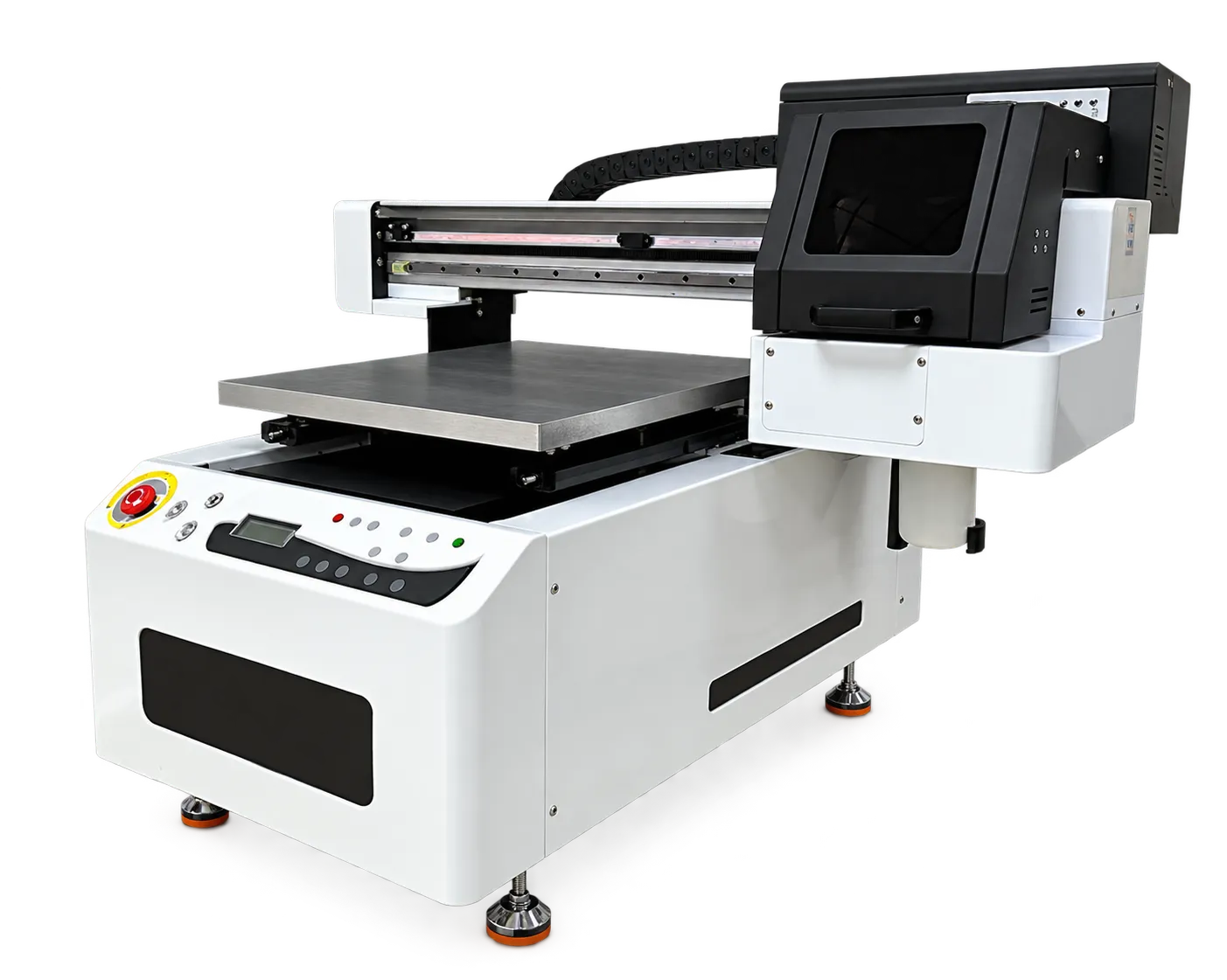
Measure the printing surface
Record the highest and lowest points in the intended image area, not just the object’s overall dimensions. Include handles, rims, protective films and fixtures. Ask how the selected machine establishes a safe working gap for that shape.
Test the difficult details
Use small text, straight edges and fine lines in the actual print area. Evaluate the result on the physical object. Avoid promising that a flatbed can print around an entire curved item unless the appropriate supported attachment and sample prove it.
Production checklist
Use these checkpoints to prepare a trial or discuss the configuration with your supplier. Record the result for each item before approving a production change.
- Complete object envelope
- Surface flatness and variation
- Fixture clearance
- Actual-object print trial
Does the tallest supported object print like a flat sheet?
Not necessarily. Surface geometry and working distance influence the result. Evaluate the intended image area on the real object.
Authoritative references and further reading
The following primary sources provide related background. Instructions from other manufacturers apply to their named systems and are not PrintVision settings, endorsements or certification claims.
- Roland DG: flatbed UV printing guide ↗
General technology and application background from a UV printer manufacturer.
Discuss your application with our factory team.
Share your material, artwork size, order mix and target output so we can review a suitable configuration.
Explore related equipmentContact PrintVision