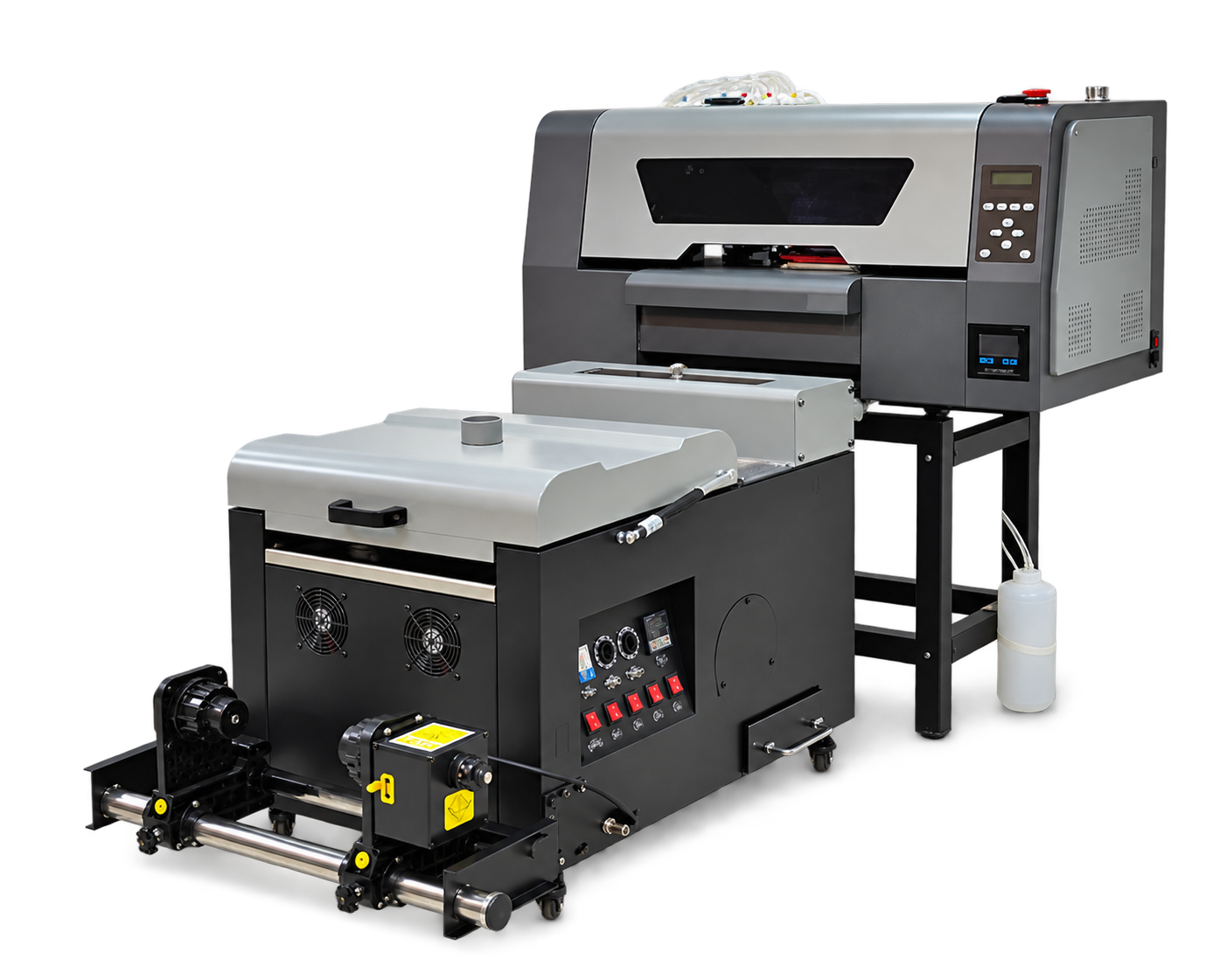
DTF printing
How to Choose the Right DTF Printer Width
Does a wider DTF printer always cost less per transfer?
DTF printing
Does a wider DTF printer always cost less per transfer?
Factory sourcing
Can I compare quotations using model names alone?
DTF printing
Does a sharp screen preview guarantee a sharp transfer?
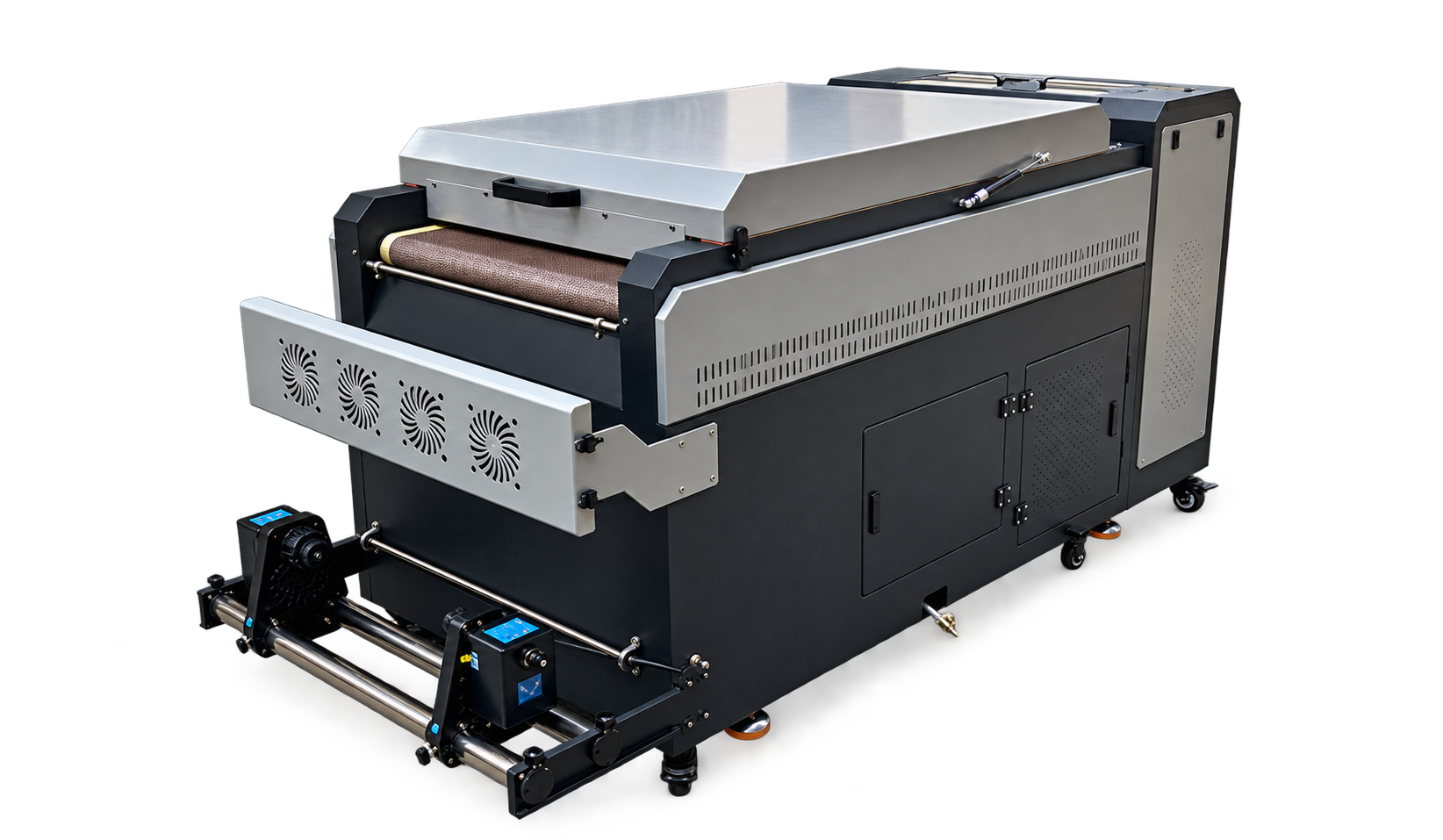
DTF printing
Is one curing temperature suitable for every DTF line?
DTF printing
Are all hot-peel films interchangeable?
DTF printing
Is the tightest possible layout always best?
DTF printing
Should I peel earlier whenever a transfer sticks?
DTF printing
Can powder solve every adhesion problem?
DTF printing
Can I advertise a wash count from one good sample?
DTF printing
Should every artwork use the same white coverage?
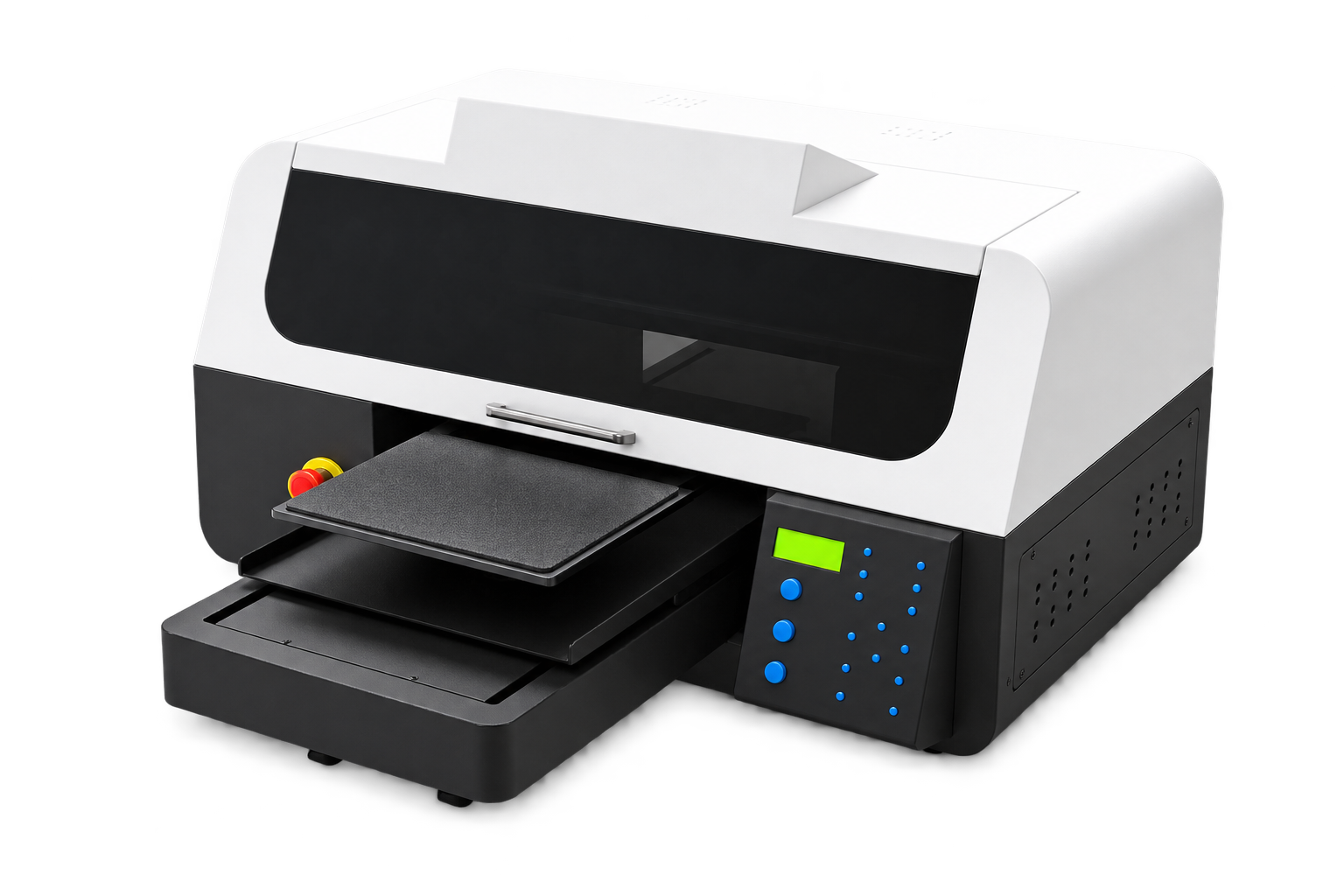
DTG printing
Can I approve every blend using one cotton sample?
DTG printing
Can DTF curing settings be reused for DTG garments?
DTG printing
Should I clean the head repeatedly every morning?
DTG printing
Is ink cost the same as garment printing cost?
DTG printing
Will the same loading method work for every garment size?
DTG printing
Can more pretreatment always improve a dark-garment print?
DTG printing
Should every small order use a different print preset?
DTG printing
Is one method always better for a small business?
Color & workflow
Is there one waiting time for every printed vinyl?
Factory sourcing
Does a supplier’s showroom sample prove my application?
Color & workflow
Can a downloaded profile fix missing nozzles?
Color & workflow
Does traceability require expensive software?
DTF printing
Can I choose a shaker using width alone?
Color & workflow
Is a photograph of the finished design enough for support?
Factory sourcing
Does OEM always mean the machine is technically redesigned?
Color & workflow
Can room planning use printer dimensions alone?
Color & workflow
Does banding always mean a damaged printhead?
Factory sourcing
Is a wooden crate alone evidence of compliant export packing?
Factory sourcing
Is a video of a running printer a full acceptance test?
Color & workflow
Can I use another printer’s holiday procedure?
Factory sourcing
Does successful power-on prove production readiness?
Factory sourcing
Can parts be selected by printer appearance?
Factory sourcing
Can quoted square meters per hour predict my daily output?
Factory sourcing
Is asking for the best printer price enough?
Factory sourcing
Does a full order book always justify a larger printer?
Factory sourcing
Should I send only a message saying print quality is bad?
Color & workflow
Should every RGB image be converted before printing?
Color & workflow
Should operators edit the approved preset during every job?
Color & workflow
Can one approved color recipe be used on every material?
UV printing
Does UV ink adhere equally to every hard surface?
UV printing
Can every curved bottle accept a full-wrap transfer?
UV printing
Is UV DTF the same as textile DTF?
UV printing
Can I use every part of the nominal bed?
UV printing
Can varnish effects be priced from ink coverage alone?
UV printing
Can a jig eliminate all placement variation?
UV printing
Does the tallest supported object print like a flat sheet?
UV printing
Should every UV job be primed?
UV printing
Does a UV-cured print automatically have every durability property?
UV printing
Can a clear-material print be judged on a white desk?
Color & workflow
Can the cheapest printable roll replace an approved medium?
Industry News
Equipment selection, workflow planning and maintenance guidance for DTF, UV and DTG printing businesses.
Technical library
Clear starting points for buyers, operators and distributors evaluating a complete production setup.

DTF printing
Choose DTF printer width around your actual artwork mix and finishing capacity. A wider machine only helps when orders, nesting and downstream handling can use the additional printable area.
Read guide ↗
DTF printing
Match the shaker to film width, intended production speed and the curing requirements of the approved consumable system. Treat the printer and finishing unit as one line.
Read guide ↗DTF printing
Select DTF film by testing print quality, powder release, peeling behavior and the finished transfer on your garments. Film descriptions alone do not establish compatibility.
Read guide ↗DTF printing
Choose powder as part of an approved film, ink and garment combination. Evaluate application consistency and finished-transfer performance rather than selecting on price or appearance alone.
Read guide ↗DTF printing
Approve the white underbase on the final garment, not just on film. The right setup should preserve artwork edges while providing the intended color appearance.
Read guide ↗DTF printing
Start from the consumable supplier’s documented curing window and verify the result through pressing and garment testing. The displayed oven setting alone does not prove a transfer is ready.
Read guide ↗DTF printing
When a DTF transfer releases poorly, first verify the film’s peel instructions and the recorded pressing process. Separate a release issue from a garment adhesion issue.
Read guide ↗DTF printing
Prepare DTF artwork at its intended print dimensions and review transparency, fine detail and underbase behavior before production. Keep an approved output file separate from editable originals.
Read guide ↗DTF printing
Measure usable transfers per roll, not just printed area. Efficient nesting balances film utilization with cutting, order identification and pressing labor.
Read guide ↗DTF printing
A useful wash-test record identifies the exact garment, transfer process and care conditions. Avoid claiming a fixed wash life unless that claim is supported by a defined test.
Read guide ↗
UV printing
Choose the bed around finished objects, fixture space and loading access. Nominal bed dimensions do not show how many saleable objects fit in a production cycle.
Read guide ↗UV printing
Test adhesion on the exact substrate and finish you intend to sell. Material names such as acrylic or metal do not capture coating, contamination or batch differences.
Read guide ↗UV printing
Use primer only when the ink, equipment and substrate suppliers approve it and a controlled trial shows a useful result. Primer is not a universal substitute for substrate testing.
Read guide ↗UV printing
Specify viewing direction, transparency and layer order before printing white on clear materials. The approved sample should be viewed in the same orientation as the finished product.
Read guide ↗UV printing
A useful UV jig locates objects consistently without creating new height or clearance problems. Validate it with the real object variation found in production.
Read guide ↗UV printing
Confirm printable height, surface shape and fixture clearance together. Maximum advertised object height does not guarantee good print quality on every tall or uneven object.
Read guide ↗UV printing
Approve gloss effects as a physical finish, not a screen simulation. Artwork separation, layer registration and the chosen print mode influence the finished appearance.
Read guide ↗
UV printing
Compare direct flatbed printing with UV DTF using the actual object, artwork and application labor. Direct printing and transferred decoration solve different handling problems.
Read guide ↗UV printing
Test the transfer on the exact curvature and surface finish. A decoration that applies easily to a flat panel may wrinkle or align differently around an object.
Read guide ↗UV printing
Keep scratch, cleaning, outdoor and contact claims separate. Each describes a different use condition and needs evidence for the actual ink, substrate and finish combination.
Read guide ↗
DTG printing
Choose between DTG and DTF by comparing your fabrics, order sizes, desired finish and handling stages. A machine-only comparison misses much of the production decision.
Read guide ↗DTG printing
Treat pretreatment as a controlled production step with an approved material, application method and drying process. Record enough information to repeat a successful garment.
Read guide ↗DTG printing
Approve each garment construction rather than relying on a generic cotton or blend label. Surface texture, finish and fiber composition can change the printed result.
Read guide ↗DTG printing
Standardize garment orientation and positioning on the supported platen. Repeated loading trials are more useful than a single perfectly aligned demonstration.
Read guide ↗DTG printing
Use the ink and garment system’s finishing instructions and verify the finished garment. A curing record should identify the method, settings and evaluation outcome.
Read guide ↗DTG printing
Small-batch efficiency comes from controlling artwork, garment identity and handling queues. Printing speed is only one part of the order cycle.
Read guide ↗DTG printing
Calculate DTG unit cost using garments that pass inspection. Include preparation, labor, finishing, maintenance and reprints alongside ink consumption.
Read guide ↗DTG printing
Use the manufacturer’s startup procedure, inspect the nozzle-check result and confirm the first production sample before releasing customer work.
Read guide ↗
Color & workflow
An ICC profile describes a color condition; it cannot repair unstable hardware or make unsuitable media printable. Use profiles with the setup they were created to characterize.
Read guide ↗Color & workflow
Follow the requirements of your validated RIP workflow rather than converting every file by habit. Preserve source-profile information and agree how critical colors will be approved.
Read guide ↗Color & workflow
Approve brand colors on the actual substrate using a defined reference and viewing condition. A color name alone does not guarantee the same appearance across materials.
Read guide ↗Color & workflow
Record the banding pattern, run the prescribed diagnostic checks and change one variable at a time. Different causes can produce similar-looking lines.
Read guide ↗Color & workflow
Keep nozzle checks dated and linked to the machine, operator and maintenance action. A consistent log makes changes easier to identify and discuss with support.
Read guide ↗Color & workflow
Request an idle-period procedure for your exact printer and ink system before a shutdown. Routine daily stopping and extended inactivity may require different actions.
Read guide ↗Color & workflow
Link material batches to production jobs so defects and changes can be investigated. A simple traceability record is more useful than an unlabelled shelf of samples.
Read guide ↗Color & workflow
Name and version validated RIP presets, and link them to the intended printer, material and print mode. Avoid silently changing the baseline used by repeat orders.
Read guide ↗Color & workflow
Lay out the room around receiving, preparation, printing, finishing and inspection. Include operator access and supplier-specified installation requirements before committing to a machine footprint.
Read guide ↗Color & workflow
Select media by application, compatible ink system and finishing requirements. A roll that feeds successfully is not necessarily suitable for the customer’s end use.
Read guide ↗Color & workflow
Follow the ink and media suppliers’ drying instructions before finishing. Printing completion and finishing readiness are separate production milestones.
Read guide ↗Factory sourcing
Compare machines using accepted output from the same job and quality requirement. Headline speed is not a complete measure of production capacity.
Read guide ↗Factory sourcing
A useful request for quotation states the application, materials, output expectations and support requirements. It lets suppliers propose comparable systems instead of guessing your needs.
Read guide ↗Factory sourcing
Use your own representative artwork and actual materials where practical. Approve a documented result that can be repeated on the quoted configuration.
Read guide ↗Factory sourcing
Agree a factory acceptance checklist before shipment and link it to the purchased configuration. It should document visible condition, functional checks and the specified sample output.
Read guide ↗Factory sourcing
Clarify what customization changes and what remains a standard product. Branding, packaging and engineering changes require different approval steps and responsibilities.
Read guide ↗Factory sourcing
Build a spare-parts plan from the exact machine configuration, supplier recommendations and expected support lead times. A generic kit may not fit your installed system.
Read guide ↗Factory sourcing
Send the machine identity, symptom, check results and recent changes in one organized report. Useful evidence helps support distinguish equipment, material and workflow problems.
Read guide ↗Factory sourcing
Installation handover should confirm the installed configuration, operator understanding and an agreed reference print. It is more than unpacking and powering on the equipment.
Read guide ↗Factory sourcing
Ask for packing dimensions, handling instructions, protective measures and destination documentation before booking transport. Confirm applicable requirements with your logistics provider.
Read guide ↗Factory sourcing
Compare configuration and scope before comparing totals. Two quotations with the same printer category may include different software, finishing, support and delivery responsibilities.
Read guide ↗Factory sourcing
Expand after measuring the actual constraint. Additional print capacity will not resolve delays caused by preparation, finishing, inspection or staffing.
Read guide ↗No guides match your search.
Equipment, samples and technical support.
Social profiles coming soonBack to top ↑